





Recognition for GENNET experts
XMEN syndrome case report highlights the power of interdisciplinary collaboration
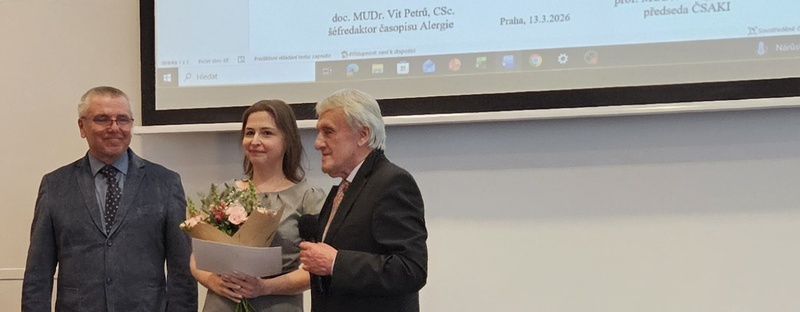
GENNET Clinic, part of the FutureLife group, has achieved an important professional success. On Thursday, 12 March 2026, MUDr. Jana Emlerová received the Professor Václav Špičák Award for the best case report published in the journal Alergie in 2025.
The award-winning article, “Rare primary immunodeficiency in the office of the allergist and clinical immunologist – XMEN syndrome,” focuses on the diagnosis of a rare inherited immune disorder in a young boy. The case report clearly demonstrates how essential experienced clinical judgement, careful synthesis of medical history, and the subsequent use of specialised laboratory and genetic methods are in modern medicine.
The publication was prepared by GENNET experts, with MUDr. Jana Emlerová playing a key role in the diagnostic process. It was her immunological expertise that led to the suspicion of a rare primary immunodeficiency and to the targeted follow-up investigations of the patient. The subsequent diagnostic work-up also involved colleagues from the Department of Genetics, including MUDr. Jan Diblík and RNDr. Jan Král. The resulting paper is therefore an example of how important interdisciplinary collaboration is in the diagnosis of rare and complex diseases.
When individual symptoms begin to make sense as a whole
In the case of rare diagnoses, the path to the correct conclusion is often complex. Patients may present with a range of symptoms that appear unrelated at first glance, yet only an experienced clinician can place them into a broader clinical context and identify the links between them.
The award-winning case report describes a situation in which it was necessary to connect the patient’s long-term clinical course, laboratory findings, and genetic testing results into one coherent whole. The ability to view the patient comprehensively and to consider a rare underlying cause was a crucial step towards establishing the correct diagnosis.
In rare immune disorders, it is often not enough to assess individual symptoms separately. What matters is the ability to synthesise information, apply clinical experience, and collaborate with centres that have access to highly specialised diagnostic methods.
The strength of interdisciplinary collaboration
At GENNET, expert care has long been built on the integration of clinical practice, laboratory diagnostics, and genetic expertise. In rare diseases, this approach is often essential — the correct diagnosis begins with clinical suspicion and is then confirmed through specialised testing.
This award-winning case report is an example of a situation in which an experienced clinical perspective led to the involvement of other specialties and the use of genetic diagnostics, which helped definitively clarify the cause of the patient’s difficulties. This kind of collaboration enables not only an accurate diagnosis, but also the appropriate setup of follow-up care and long-term patient monitoring.
Professional recognition with broader significance
Receiving the Professor Václav Špičák Award is an important recognition of the expert work carried out at GENNET Clinic. At the same time, it confirms that high-quality medicine is created where experienced clinical judgement is combined with modern laboratory and genetic diagnostics, and where different specialties work closely together to solve complex cases.
We are very pleased about this achievement and would like to warmly congratulate everyone involved in the award-winning work. It is further proof that the combination of expertise, experience, and collaboration can lead to outcomes that have real significance not only for the professional community, but above all for patients.


